
Hagia Sophia Photos
What does Hagia Sophia actually look like? These photos walk the visit in order — the exterior from Sultanahmet Square, the dome from the nave floor, the mosaics you meet in the upper gallery, and the square it shares with the Blue Mosque. Every picture shows something you will see on the standard visitor route.
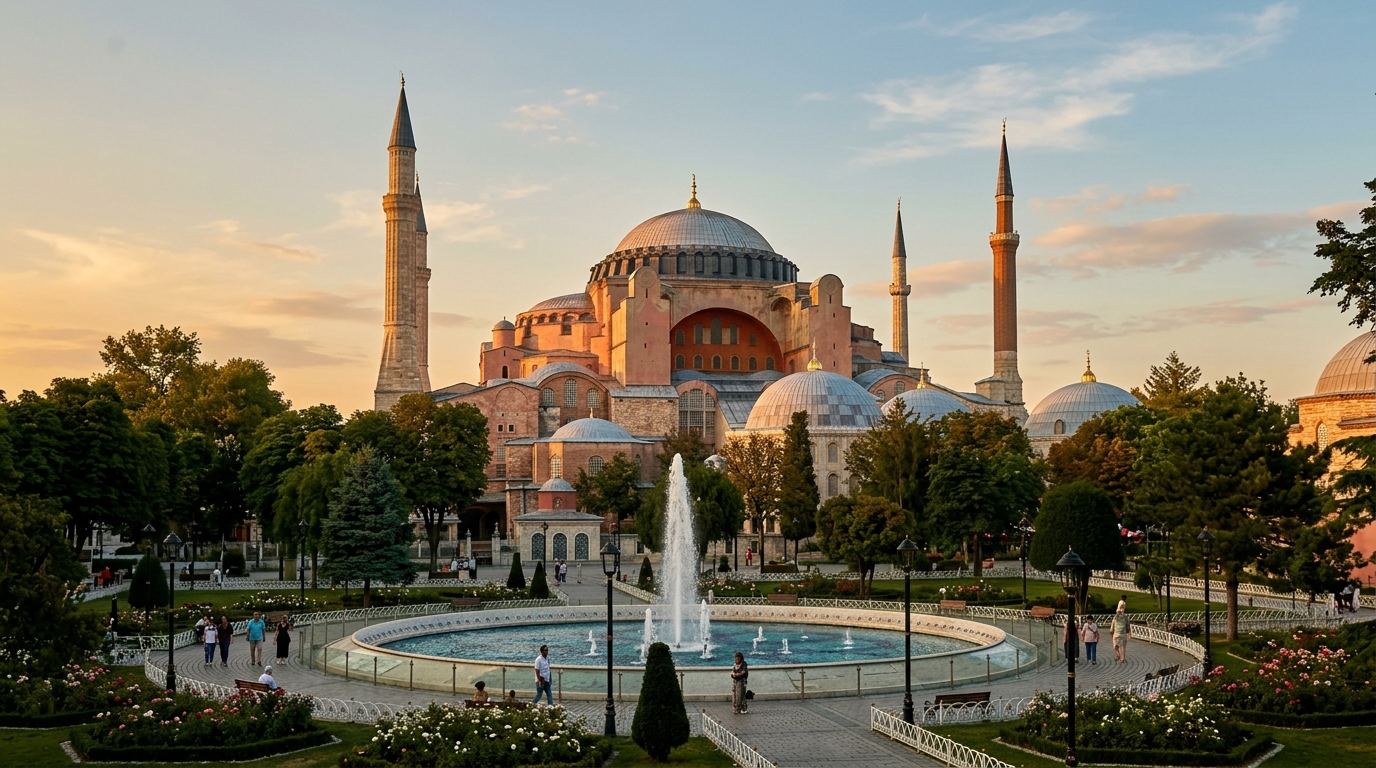
The exterior at golden hour
Hagia Sophia from Sultanahmet Square at golden hour: the central dome, the cascading semi-domes and the four Ottoman minarets added after 1453.
This is the classic first sight of the building, taken from the gardens between Hagia Sophia and the Blue Mosque. The rose-coloured render is a 19th-century choice; beneath it sits 6th-century brick and mortar. Late afternoon light flatters the west front best.
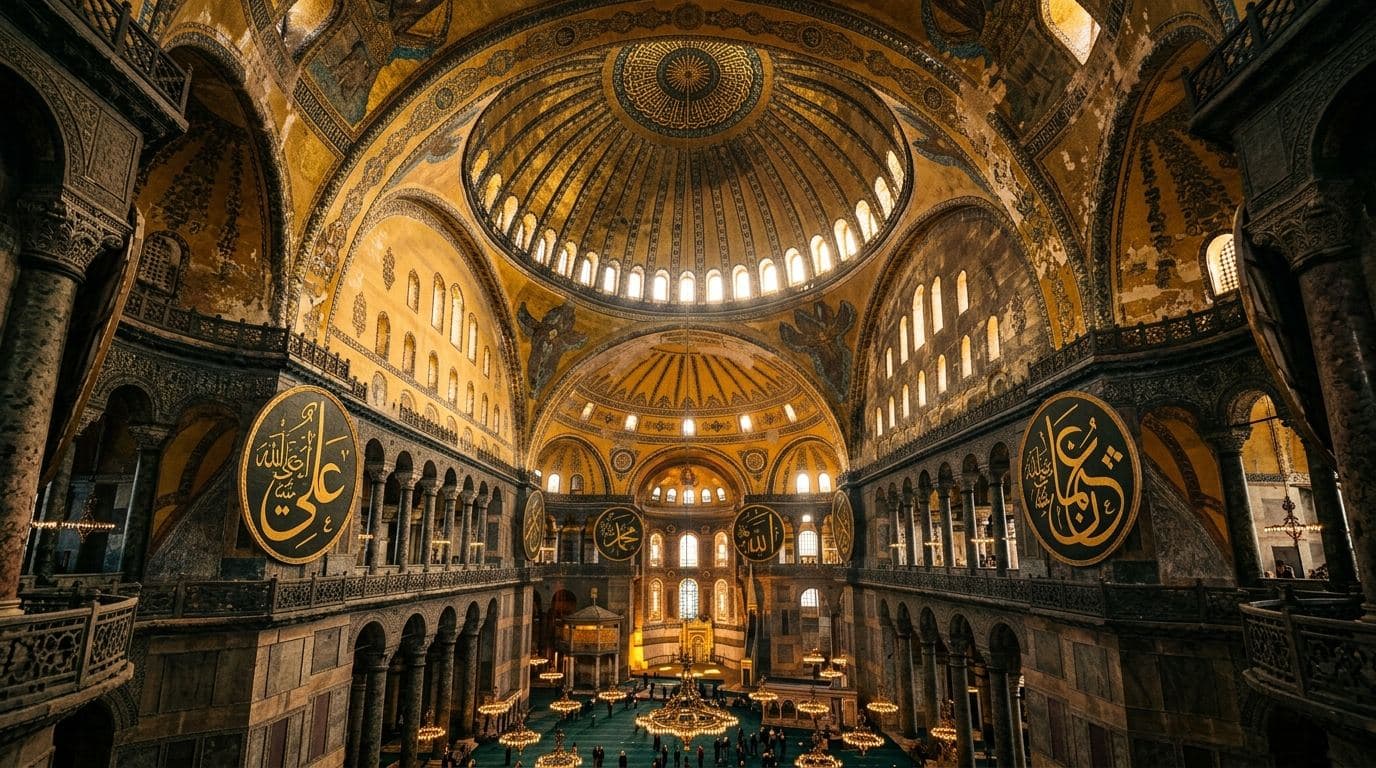
The great dome from below
The 31-metre dome of Hagia Sophia with its ring of forty windows — the view straight up from the nave that has stunned visitors since 537 AD.
The forty windows around the dome’s rim dissolve its weight into light — the effect contemporaries described as a dome “suspended from heaven by a golden chain.” The huge calligraphy roundels below it are Ottoman, painted by master calligrapher Kazasker Mustafa İzzet Efendi.
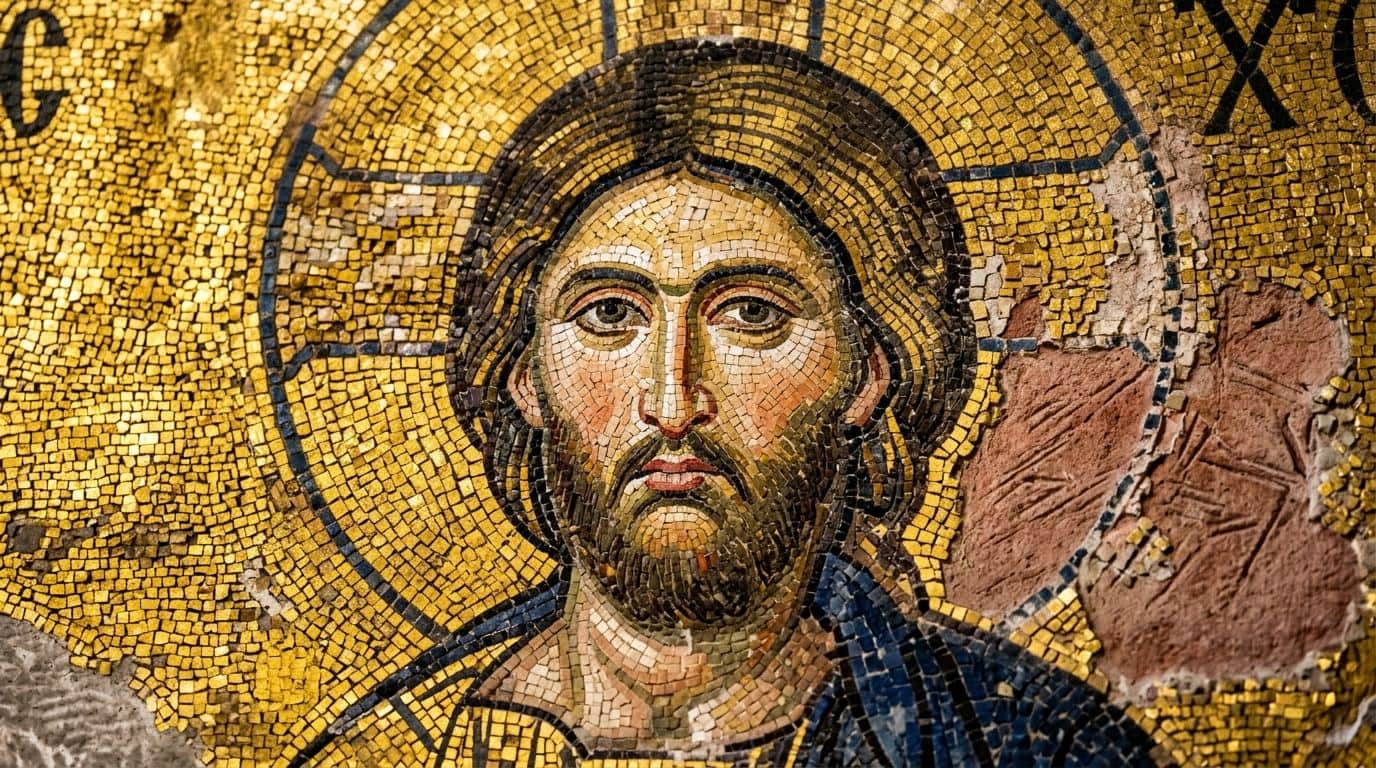
The Deesis mosaic
The 13th-century Deesis mosaic in the upper gallery: the face of Christ, worked in gold-glass tesserae, widely called the finest Byzantine mosaic in existence.
You meet the Deesis at eye level on the upper-gallery visitor route — the closest encounter with Byzantine art the building offers. Roughly a third of the panel survives, and it is more moving for it. Give it unhurried minutes rather than a single photo.
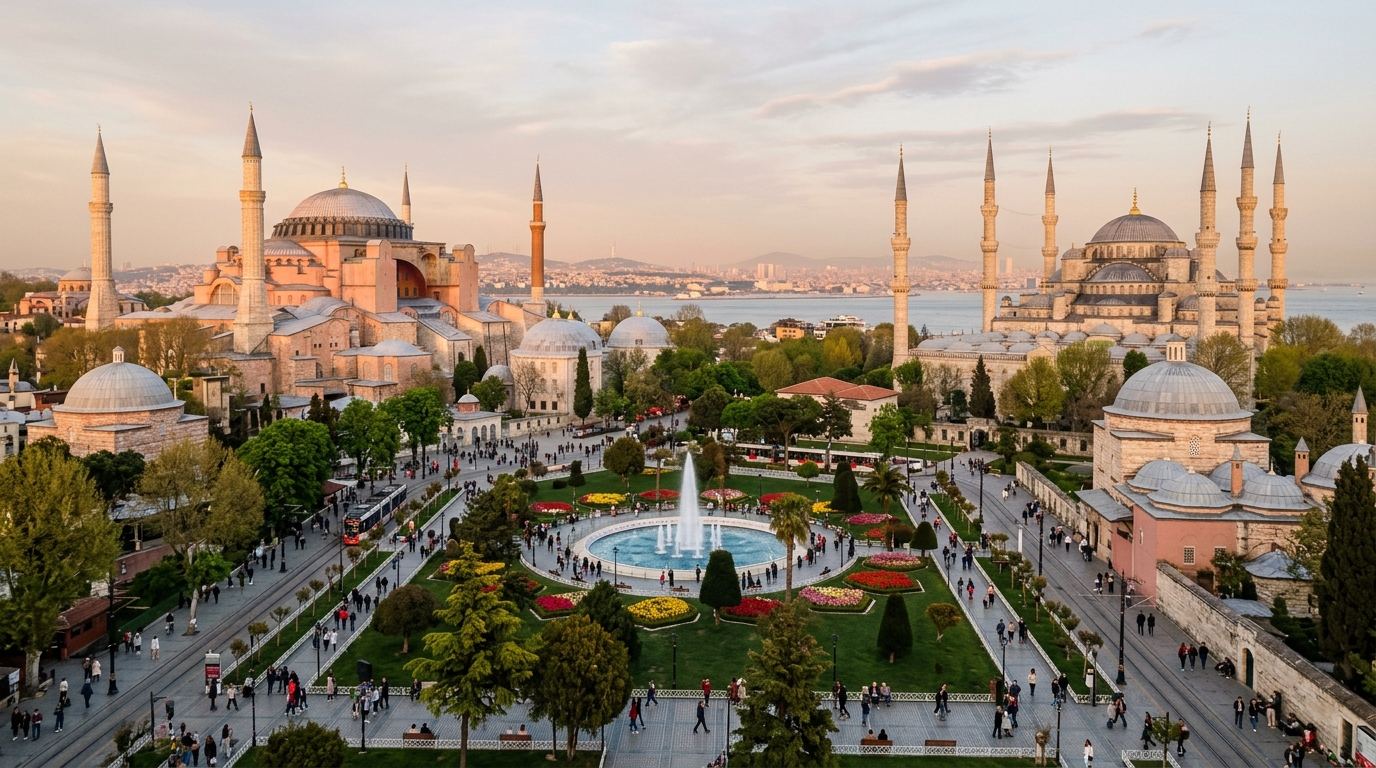
Facing the Blue Mosque
Sultanahmet Square with Hagia Sophia and the Blue Mosque facing each other across the gardens — a thousand years of architecture in one frame.
Stand mid-square and turn: Hagia Sophia on one side, the Blue Mosque answering it on the other, built eleven centuries apart. The fountain between them is the most photographed spot in old Istanbul, especially in the hour before sunset.
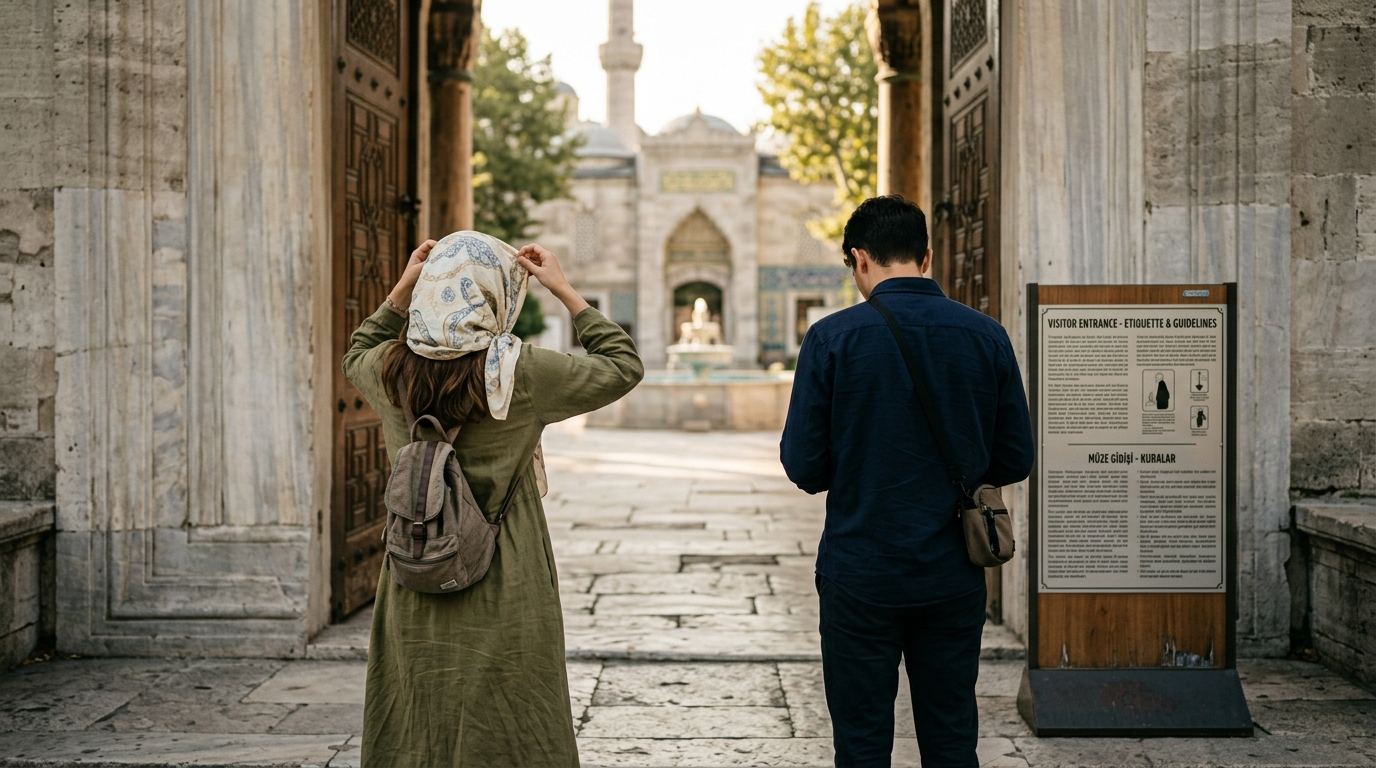
Visitors at the entrance
Visitors dressed for a working mosque — covered shoulders and headscarves — at the entrance. Hagia Sophia has been an active mosque again since 2020.
A useful reality-check photo before you go: this is an active place of worship, and modest dress applies to everyone on the visitor route. What exactly to wear is covered in our dress code guide.
Seeing it in person
Photographs flatten what is really a building about scale and light: the dome reads far larger from the nave floor than any lens conveys, and the gold mosaics shift with the sun through the day. Personal photography is welcome inside (keep flash off and avoid photographing worshippers). For the stories behind these images, see the mosaics guide, the architecture and dome page and what to see inside — and check the opening hours to catch the light at its best.