
Hagia Sophia Mosaics: A Guide to Every Major Panel
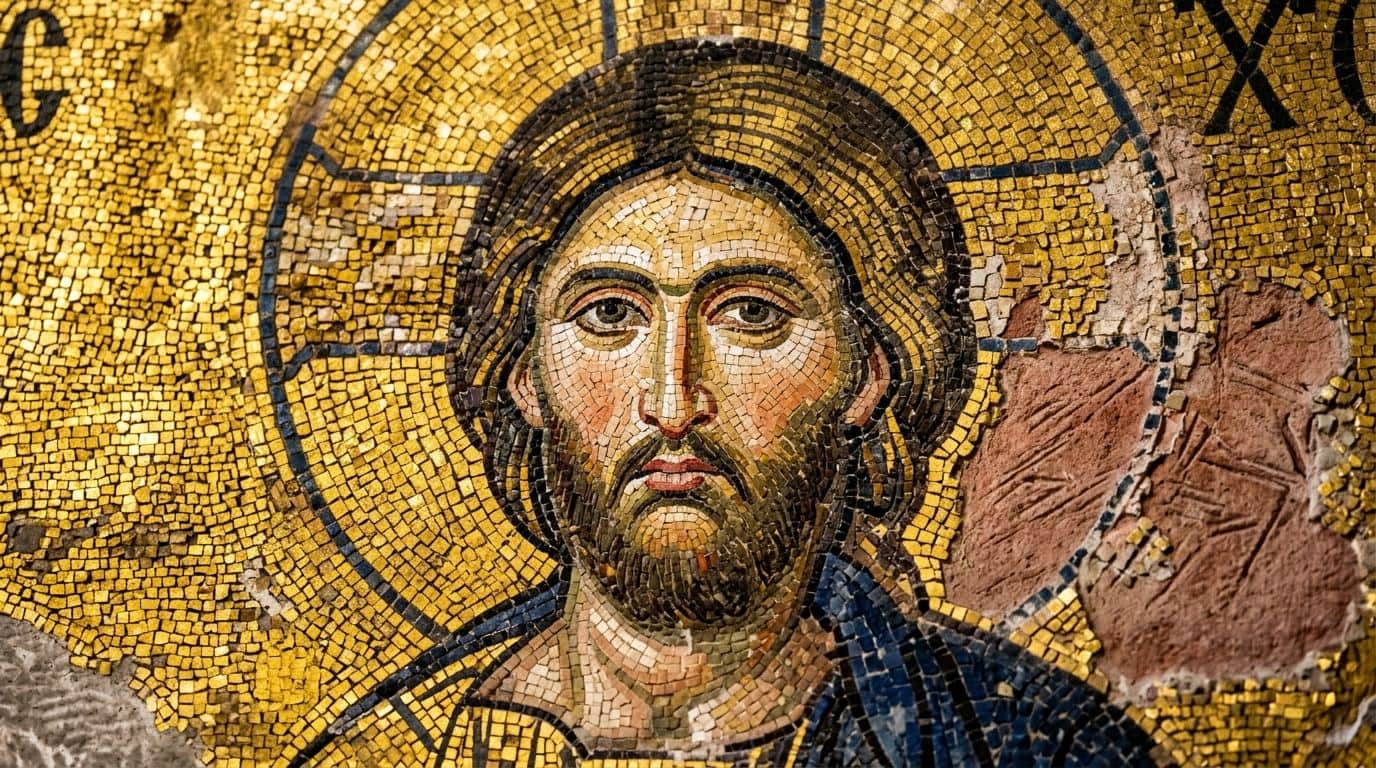
The great Hagia Sophia mosaics cluster in the upper gallery and around the entrances, which means today’s visitor route shows you nearly all of them. Since the gallery-only system began in January 2024, tourists actually stand closer to the Deesis and the imperial panels than ground-floor visitors ever did. The one caveat: this is a working mosque again, and the apse mosaic disappears behind curtains at prayer times.
These are the original mosaics, not reproductions: millions of gold-glass tesserae laid across nine centuries of Byzantine rule, hidden for the Ottoman era, and recovered piece by piece. Here’s every major panel, where it is, and how to catch it at its best.
Which Hagia Sophia Mosaics Can You See Today?
On the current route you’ll see the Deesis, the Empress Zoe and Komnenos panels, and the Marble Door in the south gallery; the apse Virgin and Child and the calligraphy-crowned dome from the gallery rail; the seraphim on the pendentives; the Leo VI lunette above the Imperial Gate; and the vestibule mosaic in the exit corridor. The walk-through of the interior puts these in route order; below, we take them one by one.
The Deesis Mosaic (c. 1261)
If you see one thing in the building, make it this. The Deesis, on the west wall of the south gallery, shows Christ Pantocrator flanked by the Virgin Mary and John the Baptist, both leaning toward him in intercession. It was likely made around 1261, as the Byzantines reclaimed their city from Latin rule, and it’s widely considered the finest Byzantine mosaic in existence. The modelling of the faces reads more like painting than stonework. The lower half is lost, which somehow makes the surviving faces feel even more immediate.
The Apse Virgin and Child (867)
High in the half-dome of the apse sits the Theotokos, the Virgin enthroned with the Christ Child, unveiled in 867 as the first great figural mosaic after Iconoclasm, the empire’s long official ban on sacred images. You view it from the gallery, down the full length of the nave, glowing above the mihrab. Since 2020, curtains conceal it during each of the five daily prayers, so if the apse looks blank when you arrive, wait; the curtains open again once prayers end.
The Empress Zoe Panel (11th Century)
In the south gallery, Christ stands between Emperor Constantine IX Monomachos and Empress Zoe, who present offerings. Look closely at the emperor’s face: it sits slightly oddly because it was reworked. Zoe remarried, and rather than commission a new mosaic, the workshop swapped in the new husband’s head. Byzantine pragmatism, preserved in gold glass.
The Komnenos Panel (1122)
A few steps away, the Virgin and Child stand between Emperor John II Komnenos and Empress Irene. Made in 1122, it’s the Zoe panel’s quieter, more dignified sibling, and the two together are a rare chance to look Byzantine rulers in the eye at arm’s length. This intimacy is the gallery route’s real gift.
The Door Mosaics: Imperial Gate and Southwestern Vestibule
Two more panels guard the thresholds. Above the Imperial Gate, the huge central doorway once reserved for emperors, a 9th- to 10th-century lunette shows Emperor Leo VI kneeling before Christ. And in the southwestern vestibule, which now serves the exit corridor, a 10th-century mosaic shows two emperors making gifts to the Virgin and Child: Constantine offers the city of Constantinople, Justinian offers Hagia Sophia itself. It’s easy to miss on the way out with your head still full of the dome. Don’t.
The Seraphim on the Pendentives
On the four pendentives beneath the dome hover six-winged seraphim. Their faces were covered for centuries, and a 2009 restoration uncovered one, so a single angelic face now looks down from the corner of the dome. You’ll get your best view from the gallery rail; details on how the pendentives themselves work are in our architecture guide.
Covered, Documented, Recovered: How the Mosaics Survived
Figural images have no place in a mosque, so after the 1453 conversion the mosaics gradually went under cover rather than under the hammer, and that concealment is why they exist at all. During the Fossati brothers’ restoration of 1847–1849, the Swiss-Italian architects uncovered, documented, and then carefully re-covered many panels, leaving a record that guided later work. After the building became a museum in 1935, restorers gradually brought the survivors back into the light. The full sweep of that story, church to mosque to museum to mosque, explains most of what you’ll see and can’t see today.
Since the 2020 return to worship, the arrangement is a workable compromise: gallery mosaics remain on view throughout, and only the apse Virgin is curtained during prayers.
When and How to See Them at Their Best
Gold-glass tesserae live on light, and the mosaics change character as the sun moves across the forty dome windows. Give the Deesis a few unhurried minutes rather than one photo — our photo gallery shows the detail you’re looking for — and bring a zoom lens or binoculars for the apse and the seraphim, which are far away even from the gallery. Time your visit between prayers so the apse curtains are open; the opening hours page tracks visiting times and the daily prayer pauses, including the long Friday midday closure, and our plan your visit page covers entrances and what to combine it with. Entry to the gallery route is ticketed for foreign visitors, so it’s worth a moment to book your visit ahead of time, then use the queue-free minutes you saved on the mosaics themselves.