
Hagia Sophia vs Blue Mosque: What's the Difference?
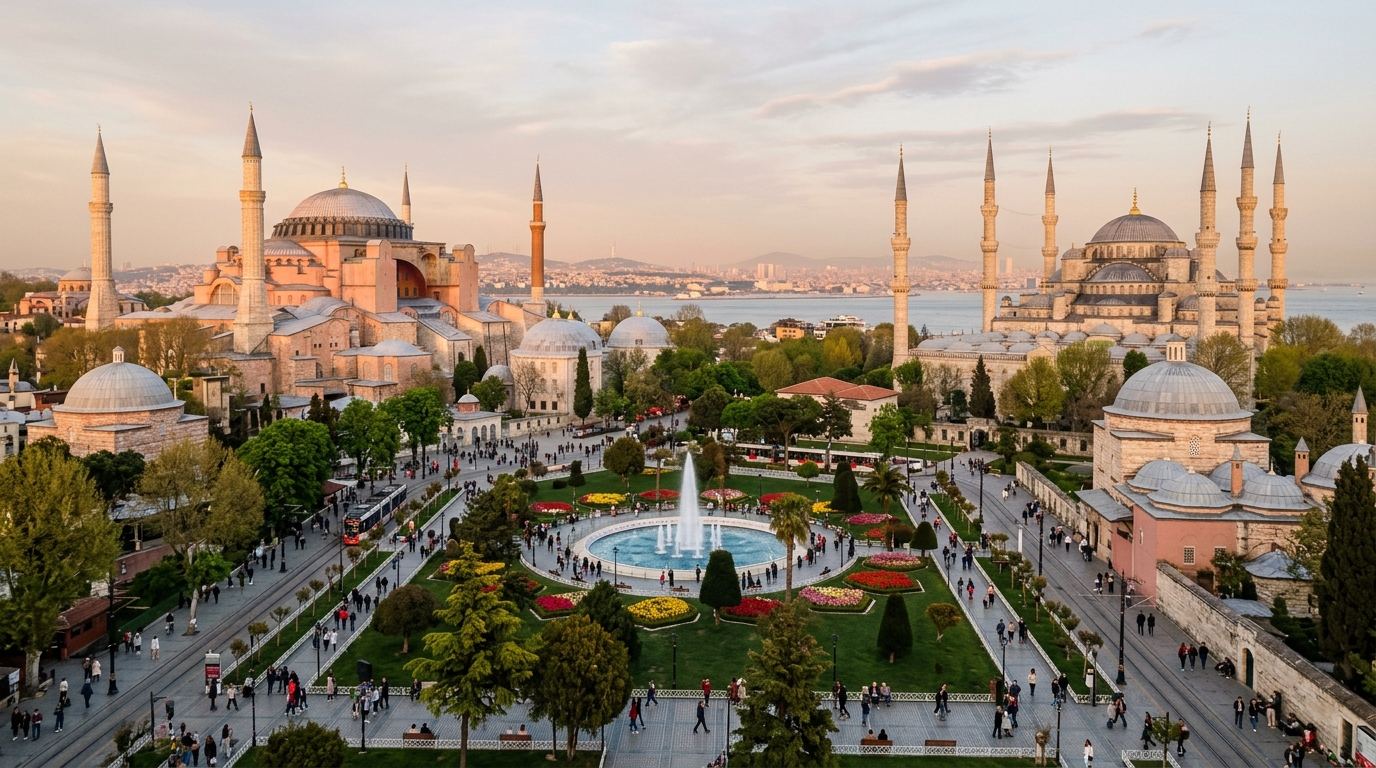
Hagia Sophia and the Blue Mosque stand face to face across Sultanahmet Square, about a three-minute walk apart, and the correct answer is to visit both. The real “Hagia Sophia vs Blue Mosque” question isn’t which one deserves your time. It’s how two buildings that look like siblings from the outside turn out to be completely different experiences inside, and which order to see them in. One is a 6th-century cathedral that became a mosque; the other is a 17th-century mosque that was built to answer it. Here’s how they compare.
Hagia Sophia vs Blue Mosque at a glance
| Hagia Sophia | Blue Mosque | |
|---|---|---|
| Completed | 537 AD | 1616 |
| Origin | Byzantine cathedral, converted to a mosque in 1453 | Purpose-built Ottoman imperial mosque |
| Famous for | The floating dome and gold mosaics | Six minarets and blue İznik tiles |
| Entry for tourists | Ticketed upper-gallery route (€25 for foreign visitors) | Free for everyone |
| Status today | Active mosque | Active mosque |
| Time needed | About an hour | Roughly 30–45 minutes |
Which is older, and who built them?
The gap between them is staggering: 1,079 years. Hagia Sophia was inaugurated in 537 AD under Emperor Justinian I, designed by two scientists, the mathematician Anthemius of Tralles and the geometer Isidore of Miletus. The Blue Mosque, officially the Sultan Ahmed Mosque, was completed in 1616. When its architects raised their domes, Hagia Sophia had already been standing across the square for nearly eleven centuries.
That age difference explains their relationship. The Blue Mosque, like the other great imperial mosques of Istanbul, is in open conversation with Hagia Sophia, borrowing the dome-and-semi-dome formula the Byzantines invented and refining it with Ottoman confidence. How that 6th-century engineering actually works is a story of its own; see our architecture guide for the details of the dome.
What do the interiors feel like?
Different centuries, different palettes. Hagia Sophia’s interior is Byzantine: millions of gold-glass tesserae, figural mosaics of Christ, the Virgin and the emperors, and a vast, shadowy nave under a dome that seems to hang from nowhere. The mood is weight and mystery.
The Blue Mosque is light and pattern. Its nickname comes from the blue İznik tiles that sheet its interior walls, and the effect is bright, ordered and unmistakably Ottoman. There are no figural images at all, only tile, calligraphy and stained glass. If Hagia Sophia makes you whisper, the Blue Mosque makes you look up and smile. Neither is “better”; they’re two answers to the same architectural question, four hundred years apart… which is exactly why seeing them back to back is so satisfying.
How does entry work at each one?
This is the biggest practical difference. The Blue Mosque is free for all visitors, no ticket at all; you simply queue at the tourist entrance outside prayer times and dress modestly.
Hagia Sophia has run a two-tier system since 15 January 2024. The ground floor is reserved for worship and is free for worshippers, while foreign visitors buy a €25 ticket for a dedicated route through the upper gallery, entered from the southwest side. Children under 8 go free. The gallery route is no consolation prize: it’s where the finest mosaics are, with a full view down into the nave. If you’d rather not gamble on the gate queue, you can reserve your Hagia Sophia entry slot ahead and walk straight to the visitor entrance.
What about crowds and prayer times?
Both are working mosques, so both pause tourist visits around the five daily prayers, typically for 30 to 60 minutes at Hagia Sophia, with the Friday midday prayer causing the longest closure at both. Prayer times shift daily with the sun, which catches out anyone working from last month’s blog screenshot. Our opening hours page explains the rhythm and the quietest windows.
Crowd patterns differ, though. Hagia Sophia’s ticketed route regulates its own flow, so the pinch point is the ticket queue outside. The Blue Mosque is free, which means its line balloons whenever a few tour groups converge, especially mid-morning. Early morning is kind to both.
Which should you visit first?
See both in one morning and let prayer times set the order. A pattern that works well: arrive at Hagia Sophia for opening at around 09:00, spend an hour in the gallery, then cross the square to the Blue Mosque before the midday prayer closes it. If you land in Sultanahmet later in the day, flip it, since the Blue Mosque’s free entry makes it the easier one to slot into a gap.
Skip Fridays around midday entirely if you can; roughly 11:30 to 14:30 is prayer-affected at both. And give the square itself ten minutes. Standing between the two, with a 6th-century dome on one side and six minarets on the other, is one of the best free experiences in Istanbul.
The verdict, then, isn’t Hagia Sophia vs Blue Mosque at all. It’s Hagia Sophia and Blue Mosque, one square, one morning, two of the most remarkable buildings anywhere. For help stitching them into a full Sultanahmet day with Topkapı Palace and the Basilica Cistern nearby, our plan your visit guide has the timings.