
Hagia Sophia Dress Code: What to Wear
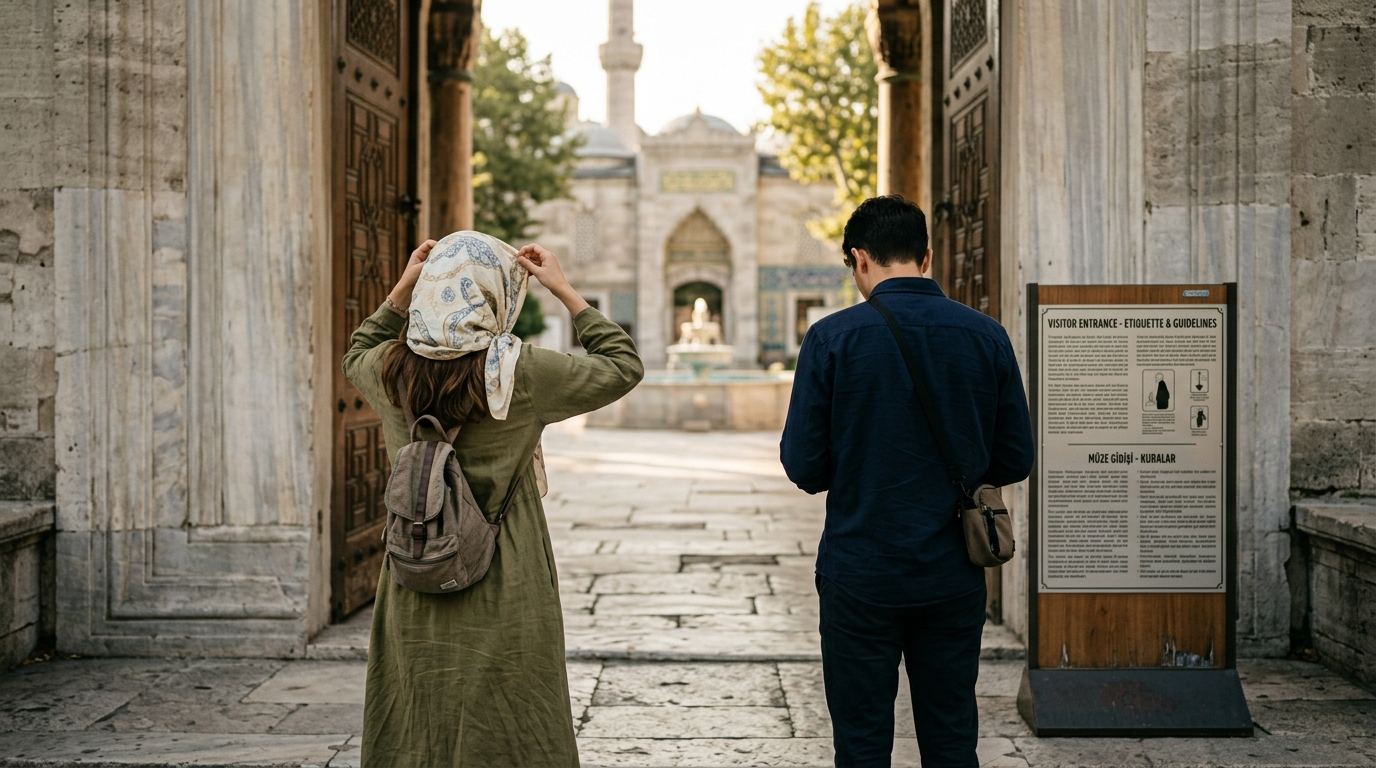
The Hagia Sophia dress code is simple: everyone covers shoulders and knees, women cover their hair with a headscarf, and shoes come off only on the prayer carpets. Men can’t wear shorts above the knee or sleeveless tops, and nothing is rented or handed out at the door, so a light scarf in your bag solves the whole thing. The building has been an active mosque again since 2020, and the rules are ordinary mosque etiquette, not a special hurdle invented for tourists.
Here’s exactly what that means for what you pack and wear, for women, for men, and for the perennially confusing question of shoes.
The Hagia Sophia Dress Code at a Glance
- Everyone: shoulders and knees covered.
- Women: headscarf on when entering.
- Men: no shorts above the knee, no sleeveless tops.
- Shoes: off only on the ground-floor prayer carpets; the upper-gallery visitor route is walked with shoes on.
- At the door: nothing is provided, no scarf loan, no cover-up rental.
That’s the whole rulebook. Everything below is detail and packing sense.
What Women Need to Wear
Shoulders and knees covered, plus a headscarf when you enter. A light cotton or viscose scarf is the single most useful item you’ll pack for Istanbul; it weighs nothing, doubles as sun cover, and works at every mosque in the city, not just this one.
Loose trousers, jeans, midi skirts and dresses that reach past the knee all work. Very tight or sheer clothing sits in a grey zone: it technically covers, but attendants sometimes ask for an extra layer, so loose beats skin-tight here. If you land at the square scarfless, don’t panic; shops nearby sell cheap ones, though at tourist prices.
What Men Need to Wear
No shorts that end above the knee, and no sleeveless tops. A T-shirt is fine, jeans or long trousers are fine, and below-knee shorts pass. Taking your hat or cap off inside is polite, and attendants appreciate it even where nobody insists.
In summer this catches out more men than women. If your Istanbul wardrobe is all gym shorts, keep one pair of light long trousers in the daybag for mosque visits.
Do You Take Your Shoes Off?
Only on the prayer carpets. The ground floor of Hagia Sophia is the worship area, and shoes come off before anyone steps onto its carpets. The visitor route, however, runs through the upper gallery, and you walk it with your shoes on, which surprises people who expect the full-mosque routine.
So for most foreign visitors the honest answer is: probably not at all. Wear comfortable shoes for the long stone ramp up to the gallery and don’t overthink it. Attendants may still ask for scarves or general modesty on the route, so the clothing rules apply everywhere even where the shoe rule doesn’t.
Respect Inside a Working Mosque
The dress code is really a respect code, and a little awareness goes further than any wardrobe choice. This is a functioning mosque where people pray five times a day, and tourist entry pauses around each prayer; our opening hours page explains the rhythm.
On photography: shoot the architecture freely, but avoid pointing a camera at worshippers, and keep your voice down whenever prayer is underway. During prayers, curtains conceal the apse mosaic of the Virgin and Child, which is worth knowing if that mosaic is high on your list of things to see inside.
Dressing for the Season
In summer, think loose and long rather than short: linen trousers, a light long-sleeved shirt or a maxi dress will keep you cooler than shorts on the sun-baked square, and the vast stone interior stays noticeably cooler than outside. In winter, dress warmly; you keep your shoes on for the gallery route anyway, and the ramp and gallery can be chilly.
Rain matters less than you’d think, since the visit is almost entirely indoors, but the queue at the entrance is not, so a compact umbrella earns its place in the bag.
The One-Bag Checklist
Before you head to Sultanahmet: a light scarf, knees and shoulders covered or coverable, comfortable closed shoes, and hat off at the threshold. That’s it. With the wardrobe handled, sort the practical side, timing, entrances and how it fits into your day, with our plan your visit guide, and reserve your entry slot so the only thing you’re waiting on is the call to prayer to finish.